Renter Friendly Kitchen Backsplash: Peel-and-Stick or Removable Panel?
The short answer: a renter friendly kitchen backsplash can be worth it, but only if you match the material to the risk zone. For color and decor inspiration before picking materials, see our dark cottagecore kitchen styling guide. Peel-and-stick tile is best for a smooth, flat, clean wall away from major heat and standing moisture. Behind a stove, on textured paint, or in a lease that bans contact paper or removable wallpaper, a removable backsplash panel is usually the safer decision.
That may sound less fun than buying the first pretty tile sticker you see, but it is the difference between a small apartment kitchen that feels intentional and a move-out day spent negotiating over paint damage, adhesive residue, or a security deposit deduction. Before you buy anything, plan the stove area, sink splash zone, wall surface, lease restrictions, and removal method.
Start with the three-zone test
Most rental kitchen backsplash decisions become clearer when you stop thinking of the wall as one big blank surface. Divide it into three zones: the general prep wall, the sink splash zone, and the stove or heat zone.
- General prep wall: This is the lowest-risk place for peel-and-stick tile, especially if the wall is painted with a durable finish and feels smooth to the touch.
- Sink splash zone: This area gets water droplets, dish soap, steam, and frequent wiping. Water-resistant does not always mean waterproof, so seams and edges matter.
- Stove zone: This is where heat exposure, grease, open flame, hot pans, and clearance rules matter most. Treat this area separately, not as an extension of the decorative wall.
For context, WallPops says its InHome backsplash tiles are water-resistant but not waterproof, work best on smooth flat surfaces, may take paint off because of stronger adhesive, and should be kept at least 15 inches from a stove or heat source when there is no backing, according to the brand’s backsplash FAQ. That one manufacturer’s guidance is not a universal rule for every product, but it is a useful reminder: “renter safe” still depends on surface, location, and heat.
When peel-and-stick backsplash is worth it
A peel and stick backsplash for renters is most worthwhile when your goal is visual improvement, not heavy-duty wall protection. It can make a dated rental kitchen feel cleaner, brighter, and more finished, particularly in a small apartment kitchen where a few square feet carry a lot of visual weight.
It is a better candidate when all of these are true:
- Your lease does not ban adhesive coverings, contact paper, removable wallpaper, or temporary wall treatments.
- The wall is a smooth flat surface, not bumpy orange peel, crumbling plaster, exposed brick, or raw wood.
- The wall can be cleaned thoroughly and left to dry before installation.
- The backsplash will not sit too close to a burner, toaster oven, high-heat appliance, or open flame.
- You are comfortable doing a wall patch test and accepting that removal is not risk-free.
If you are already using removable art, command-style hooks, or other temporary upgrades, this project belongs in the same family as broader renter-friendly wall decor ideas: helpful, attractive, and reversible in theory, but never something to install blindly on fragile paint.
Best small-apartment uses for adhesive tile
Some of the strongest small apartment kitchen backsplash ideas are modest. Instead of covering every visible wall, consider a tight band behind a coffee station, a short run between the counter and upper cabinets, or a contained rectangle behind a prep area. Smaller applications cost less, reduce removal time, and limit your exposure if the adhesive does not behave well.
A worked example: if your counter run is 72 inches wide and the space under the cabinets is 18 inches high, that area is 9 square feet. Add about 10 to 15 percent for cuts and mistakes, and you are shopping for roughly 10 to 11 square feet of material. Measuring before you browse helps prevent impulse-buying a pattern that will require awkward seams or extra sheets.
When a removable panel is the better rental choice
A removable backsplash rental kitchen setup is often smarter when the wall itself is the problem. If the paint is chalky, textured, greasy, peeling, or already patched, adhesive products are more likely to fail or pull up paint. A no drill kitchen backsplash panel can also be a better route when your lease language is strict.
Look for a backsplash panel approach when:
- Your lease bans contact paper, removable wallpaper, or adhesive liners.
- You need a temporary backsplash behind stove areas but cannot confirm that adhesive tile is allowed near heat.
- The wall has texture that prevents full contact with peel-and-stick adhesive.
- You want protection from splatter more than a decorative tile effect.
- You need something you can remove in minutes before inspection or move-out.
Panel options vary: some renters use a cut-to-size sheet placed behind a freestanding range, a manufacturer-approved stove splash guard, or a lightweight panel secured without drilling where the lease allows. The important part is not the label “removable”; it is whether the specific product is allowed in that location, stable in use, and appropriate for the heat and cleaning demands of your kitchen.
| Situation | Better choice | Why |
|---|---|---|
| Smooth painted wall away from stove | Peel-and-stick tile after a patch test | Lower heat risk and better adhesive contact |
| Wall behind an active stove | Manufacturer-approved removable panel or splash guard | Heat exposure and fire safety matter more than looks |
| Textured or fragile wall | Freestanding or removable panel | Adhesive may not bond evenly and may damage paint |
| Lease bans adhesive coverings | No-drill panel, styling changes, or landlord-approved option | Deposit risk is a lease issue, not just a design issue |
| Sink area with frequent splashing | Panel or carefully sealed product approved for damp areas | Water-resistant materials still need edge protection |
Be extra careful behind the stove
The stove area is where rental decorating advice can get sloppy. Do not assume that a product called “renter safe peel and stick tile” is safe behind a gas range, electric coil, or high-output cooktop. Product pages can be vague, and heat exposure is not just a durability issue.
The U.S. Fire Administration notes that cooking is the leading cause of home fires and home fire injuries, and its cooking fire safety guidance emphasizes safe stovetop habits. A temporary decorative backsplash should never make the cooking area less safe, harder to clean, or more cluttered.
Before putting anything behind a stove, check:
- The product’s stated heat limitations and clearance requirements.
- Your stove type: gas flame, electric coil, radiant glass, and induction all create different surrounding conditions.
- Whether the material can warp, soften, discolor, or release adhesive near heat.
- Whether the panel or tile can be cleaned of grease without damaging the surface.
- Whether the installation interferes with ventilation, outlets, knobs, or appliance clearance.
If the manufacturer does not clearly allow the product in your stove location, choose a different solution. A plain, easy-to-clean panel that follows product instructions is less exciting than a faux-zellige adhesive tile, but it is often the more grown-up design choice.
How to do a wall patch test before installing
A wall patch test is not glamorous, but it is the best small step you can take before committing to peel-and-stick backsplash removal later. RoomMates advises applying peel-and-stick backsplash to dry, clean, grease-free surfaces, testing difficult surfaces first, and removing adhesive tile slowly with low heat from a hair dryer while warning that removal may damage the wall in its peel-and-stick backsplash FAQ.
- Read your lease first. Search for words like adhesive, alteration, wallpaper, contact paper, paint, cabinets, and fixtures.
- Clean a hidden test spot. Use a spot behind a small appliance or near the end of the counter, then let it dry fully.
- Apply a small sample. Use an offcut or sample piece, not a full tile sheet.
- Wait. Leave it in place long enough to experience normal kitchen humidity and temperature changes. A day is better than an hour; several days is more informative.
- Remove slowly. Use low heat from a hair dryer if the product instructions allow it, then peel back gradually rather than yanking outward.
- Inspect the wall. Look for lifted paint, tacky residue, staining, or a texture change.
If the test damages the wall, that is useful information. It means the full project would likely create the same problem at a larger scale.
Prep matters more than the pattern
Adhesive backsplash products are unforgiving when installed over dust, grease, or moisture. Lowe’s installation guidance for a peel-and-stick backsplash product says surfaces should be flat, smooth, clean, and free of dust, dirt, oils, and moisture, and it warns that pressing tile can permanently bond it and that removal after misplacement may damage the substrate in its product installation document.
That is your cue to slow down. Degrease the wall, especially around the range. Let it dry. Remove outlet covers only if your lease and skill level allow safe, proper reinstallation, and never work around live electrical components carelessly. Dry-fit sheets with painter’s tape before peeling the backing. Start level, because a tiny slant becomes very visible by the third row.
If you are decorating a first apartment, prioritize upgrades you can undo cleanly and affordably. A backsplash can be part of a larger plan, alongside the kinds of budget choices covered in first apartment decor ideas, but it should not be the project that causes move-out stress.
No-drill kitchen backsplash ideas that still look intentional
If peel-and-stick feels too risky, you still have options. A renter friendly kitchen backsplash does not have to mimic permanent tile to look finished.
- Use a removable backsplash panel: Choose a panel designed for kitchen use and install it according to the manufacturer’s instructions. This is especially helpful where the wall is difficult to clean.
- Create a defined appliance zone: A tray, compact coffee setup, and wipeable mat can make a blank wall feel less neglected without touching the paint. For styling help, see these small home coffee station ideas.
- Lean into contrast: If the rental has dated counters, a simple solid-color panel may look calmer than faux marble or high-contrast tile stickers.
- Use washable accessories: Cutting boards, utensil crocks, and a good-looking dish rack can visually break up the wall while staying fully removable.
- Ask for written permission: If you love a specific adhesive tile, ask the landlord or property manager before installing. A yes by text or email is better than a verbal maybe.
The most successful rental kitchens often combine one practical surface solution with a few styling decisions. You do not need to cover every inch to make the room feel cared for.
How to remove peel-and-stick backsplash with less damage
There is no guaranteed damage-free removal method for every painted rental wall. Still, careful peel and stick backsplash removal is much better than rushing.
- Check the manufacturer’s instructions. Follow the product-specific removal method first.
- Warm a corner gently. If allowed, use low heat from a hair dryer to soften adhesive. Avoid overheating the wall or nearby surfaces.
- Peel slowly at a low angle. Pulling straight out from the wall is more likely to lift paint.
- Work in small sections. Rewarm as needed instead of forcing a cold adhesive sheet.
- Handle residue carefully. Use only cleaners appropriate for the painted surface and your lease obligations.
- Document the wall. Take move-in, installation, and removal photos so you have a record of condition.
If paint starts lifting, stop. Continuing may turn a small repair into a larger patch-and-paint issue. At that point, it may be better to ask your landlord how they prefer the wall to be restored rather than guessing.
The practical takeaway
A renter friendly kitchen backsplash is not one product. It is a decision process. Use peel-and-stick tile only where the wall is smooth, clean, lease-approved, and away from risky heat or moisture. Use a removable panel when the stove, sink splash zone, textured paint, or lease restrictions make adhesive decor a bad bet.
The prettiest temporary backsplash is the one that still feels like a good idea on move-out day. Measure first, test first, read the product instructions, respect stove clearance, and choose the lowest-risk upgrade that gives your small kitchen the biggest everyday lift.
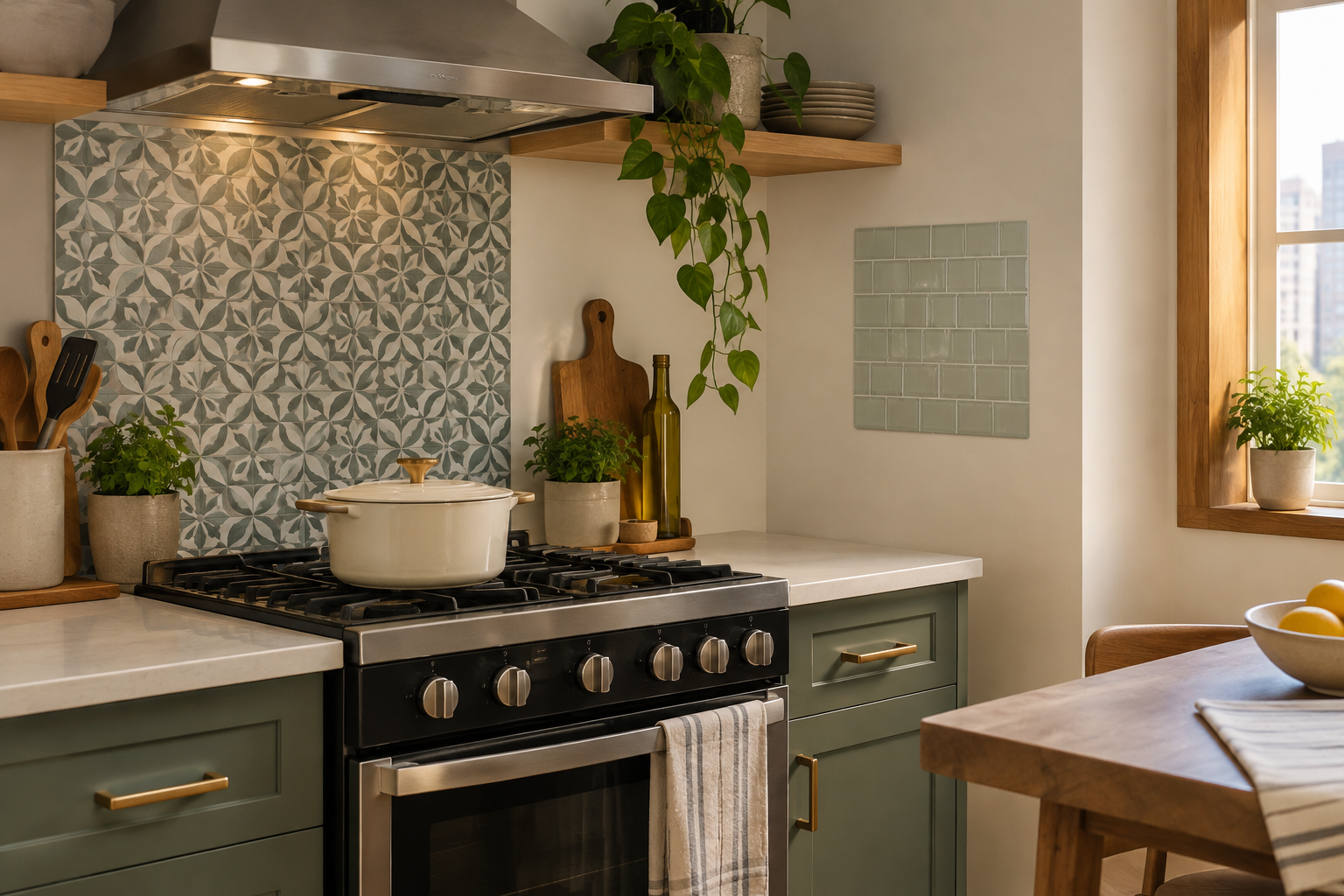
Editorial image created with AI for visual inspiration.