How to Choose Curtain Length and Placement for Small Apartments
In a small apartment, curtains do more than block light. They decide whether a low ceiling feels lower, whether a narrow window looks skimpy, and whether the room reads as finished or improvised. The most reliable framework is simple: go high, wide, and clear. Hang the treatment higher than the window, extend it wider than the frame when the wall allows, and keep the bottom clear of furniture, heaters, radiators, and safety hazards.
That does not mean every apartment needs dramatic floor-to-ceiling drapes. A studio with a baseboard heater, a bedroom window trapped behind a desk, or a nursery corner may need a shorter or cordless layered solution. The goal is not the longest curtain possible; it is the cleanest length and placement that actually works for the room you live in. If the sofa or a desk sits close to your windows, compare our small living room furniture layouts before hanging the panels.
1. Start With the “High, Wide, and Clear” Test
Before buying panels, look at each window and answer three questions:
- High: Can the rod or track sit above the window frame, closer to the ceiling, without interfering with trim, a soffit, or hardware?
- Wide: Is there enough wall space on each side for the panels to rest beside the glass when open?
- Clear: Can the fabric hang without landing on a sofa, desk, radiator, heater, crib, pet zone, or walkway?
This test keeps you from making the most common small-space mistake: copying a spacious living-room curtain setup into an apartment where the wall is doing five jobs at once. A full-length panel may be beautiful on a bare wall, but it becomes annoying if it catches on a desk chair every morning.
For a straightforward starting point, Pottery Barn’s drapery hanging guidance suggests placing the rod 4–6 inches above the window frame and extending it 3–6 inches beyond both sides. The Shade Store’s drapery guide pushes the “wide” idea farther, recommending panels hung high and wide, with rods extending about 12 inches beyond the frame on each side where possible. Treat those as useful ranges, not rigid rules. In a small apartment, the right answer depends on the wall, the furniture, and what the curtains need to clear.
2. Choose the Mounting Height Before You Choose the Length
Curtain length only makes sense after you decide where the rod or track will go. If you measure from the top of the window frame but later mount the rod near the ceiling, your panels will come up short. Instead, decide the mounting location first, then measure down from that point.
A practical workflow:
- Stand back and identify the highest realistic mounting point: above the frame, just below the ceiling, or on the ceiling with a track.
- Check for obstacles such as trim, wall vents, ceiling slopes, closet doors, or sprinkler heads.
- Mark the proposed rod or track line with removable painter’s tape.
- Measure from that line to the floor, sill, or other intended stopping point.
- Only then compare the measurement with available curtain lengths or plan alterations.
The visual tradeoff is worth understanding. Mounting higher can make a short wall feel more vertical and intentional, especially in apartments with lower ceilings. The Shade Store specifically notes that in rooms with short ceilings, ceiling mounting or hanging just below the ceiling can help create a taller effect. The tradeoff is that higher mounting may expose awkward gaps if the panels are too narrow or if the rod does not extend far enough beyond the frame.
Example: if a bedroom window sits low on a tall blank wall, a rod mounted just over the frame can make the wall feel chopped in half. A higher rod line, paired with panels that reach cleanly toward the floor, usually looks more finished. But if there is a ceiling-mounted air-conditioning unit or a bulky valance box, forcing the curtain upward may look cramped. Let the architecture decide.
3. Go Wide Enough That the Window Can Breathe
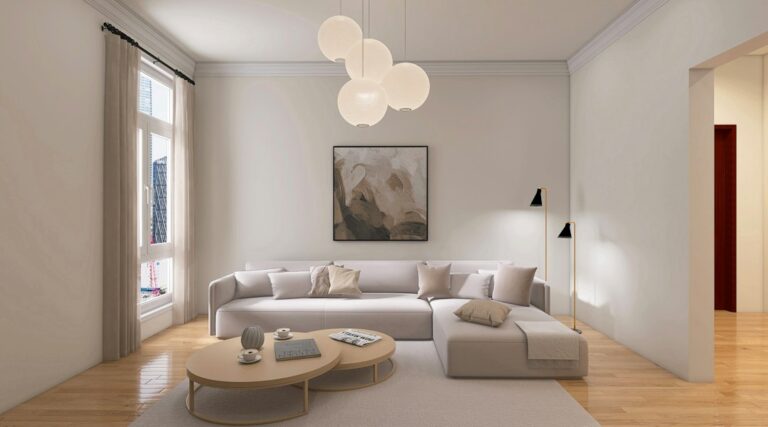
Small apartments often have narrow windows, and narrow windows look even smaller when the curtains cover part of the glass all day. Extending the rod beyond the frame gives the panels a place to stack when open, so more glass is visible and the window reads larger.
The useful range depends on the wall. Pottery Barn’s 3–6 inches beyond each side is a compact approach that works when a corner, bookcase, or adjacent window limits space. The Shade Store’s approximately 12 inches beyond each side creates a more generous look when the wall is open. In a small apartment, choose the widest placement that still feels balanced with nearby objects.
Here is a simple decision guide:
- Use a modest extension when the window is close to a corner, kitchen cabinet, closet door, or wall-mounted TV.
- Use a wider extension when the window sits on a plain wall and the panels can rest outside the glass.
- Consider a ceiling track when two nearby windows need to read as one larger feature or when side brackets would look crowded.
A mistake to avoid: buying full, heavy-looking panels and then hanging them on a rod that barely clears the window frame. The fabric bunches over the glass, the room loses daylight, and the window looks smaller. If the wall is too tight for wide curtains, a cleaner shade or a sill-length treatment may be better than cramped full-length panels.
4. Use Floor-Skimming Panels When the Wall Is Unobstructed
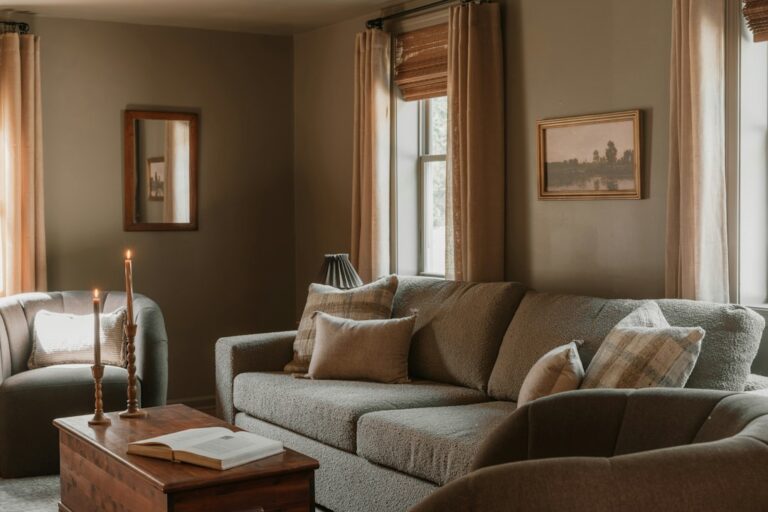
When the area under the window is clear, floor-length curtains are usually the most polished small-apartment choice. IKEA’s curtain length guide describes floor-length curtains as common and easy to maintain, while also warning against the awkward “high-water” look of curtains that stop noticeably above the floor.
For everyday use, a slight float is the cleanest target. Pottery Barn recommends curtains that fall about 1/2 inch above the floor for a clean everyday length. The Shade Store also defines a float length as about 1/2 inch off the floor and advises measuring length from the rod or track to the floor. This small clearance keeps the fabric from dragging while still reading as full length.
Use floor-skimming curtains when:
- The wall below the window is open.
- You want the ceiling to feel taller.
- The window is in a living room or bedroom where softness matters.
- You can open and close the panels without dragging them across furniture.
Tradeoff: floor-length panels can visually calm a small room, but they also claim wall space. If your sofa must sit directly under the window or your bed blocks the lower wall, full panels may look squeezed and function poorly. In that case, shorter treatments are not a design failure; they are the smarter fit.
5. Choose Sill-Length or Shorter Curtains When Furniture Is in the Way
Small apartments rarely have the luxury of empty walls. A desk may live under the bedroom window. A sofa may need to back up to the living-room window. A dining bench may sit below the only sunny wall. In these cases, sill-length curtains or another shorter treatment can look cleaner than full panels trapped behind furniture.
IKEA specifically notes that sill-length curtains can work when a desk or sofa sits below the window. The key is to make the shorter length look intentional. Do not choose a random panel that lands halfway between the sill and the floor. That is the “high-water” problem: too short to look elegant, too long to look purposeful.
Use this workflow:
- Identify the obstruction: sofa back, desk surface, radiator, heater, bed, or storage piece.
- Choose a stopping point that relates to the window, usually the sill area, rather than an arbitrary point on the wall.
- Keep the rod placement high enough to frame the window, but do not force a full-length illusion if the bottom cannot hang freely.
- Use consistent lengths on windows in the same room unless there is a clear architectural reason to vary them.
Example: in a studio apartment, a work desk under the window may make floor-length panels bunch behind the monitor and cords. A sill-length curtain, or a cordless shade paired with decorative side panels that do not need to close, can preserve the window area without creating fabric chaos.
6. Treat Radiators, Heaters, and Vents as Safety Exceptions
A beautiful curtain plan is not worth creating a heat or airflow problem. If a radiator, baseboard heater, wall heater, or vent sits below the window, do not let fabric hang onto or directly interfere with it. Choose a shorter treatment, a shade, or a layered approach that keeps the window covered while keeping fabric clear.
This is one of the moments where the “clear” part of high, wide, and clear matters more than the “high” and “wide.” Full-length curtains may photograph well, but they are often the wrong choice if they cover a heat source or block necessary airflow.
Because heater and radiator setups vary, verify clearance requirements with your appliance manual, building guidance, or landlord before installing anything near a heat source. In rental apartments, it is also smart to avoid any setup that makes maintenance access difficult. A landlord or technician should not have to fight through heavy panels to reach a radiator valve or heater control.
Design alternative: use a cordless shade inside or over the window for privacy and light control, then add stationary side panels mounted wide if the wall allows. The side panels create softness and height, while the functional shade handles coverage without dropping fabric over the heater.
7. Use Puddled Curtains Sparingly in Small Apartments
Puddled curtains—panels that extend beyond the floor and gather on it—can look romantic, but they are usually a high-maintenance choice for small apartments. Pottery Barn describes puddling as requiring 6–8 extra inches beyond a standard length. IKEA notes that puddled curtains are higher-maintenance and can collect dust.
The practical tradeoffs are easy to underestimate. Puddled fabric gets moved by vacuuming, pets, kids, robot vacuums, and daily foot traffic. In a small bedroom, the puddle may compete with laundry baskets, bedside tables, and closet doors. In a dining nook, it may collect crumbs. In a living room, it may look messy after one afternoon of opening and closing the panels.
Consider puddling only if:
- The window is decorative and the panels will not be moved often.
- The floor area is open and low-traffic.
- You are comfortable with more frequent dusting and arranging.
For most renters and small-space dwellers, a clean float just above the floor gives a more reliable everyday result.
8. Plan for Child Safety and Cord Control
If children visit or live in the home, curtain and shade choices need to account for cord safety. The U.S. Consumer Product Safety Commission’s window covering guidance states that stock window-covering operating cords must be cordless, 8 inches or less, or inaccessible. It also states that stock and custom products with inner cords must keep those cords inaccessible or too short to form a hazardous loop.
In practical decorating terms, this means cordless shades and cordless blinds deserve priority in children’s rooms, play areas, and living spaces where kids spend time. If you layer curtains over a shade, the shade should still meet the safety standard; curtains should not be used to hide an unsafe cord situation.
A good small-apartment child-safe setup is often layered but simple: a cordless shade for daily privacy and light control, plus curtain panels mounted high and wide for softness. If full-length panels invite tugging near a crib or play mat, choose a shorter or more controlled treatment instead.
9. Common Small-Apartment Curtain Mistakes to Avoid
- Measuring from the window instead of the rod. Decide the rod or track location first, then measure from there.
- Stopping the panels too high above the floor. If the goal is full length, avoid the high-water look; aim for a clean near-floor finish.
- Ignoring the stack. Panels need somewhere to go when open. If they sit over the glass, the window feels smaller.
- Forcing full length behind furniture. A sill-length curtain or cordless shade may be cleaner behind a desk or sofa.
- Covering heat sources. Treat heaters, radiators, and vents as layout constraints, not minor inconveniences.
- Choosing puddling for a busy zone. Extra fabric on the floor can become a dust and maintenance issue.
10. A Quick Room-by-Room Cheat Sheet
Small living room: If the wall is clear, mount high and extend the rod beyond the frame so panels can stack off the glass. Use a floor-skimming float for the most finished look. If a sofa sits under the window, consider sill-length curtains or a cordless shade with stationary side panels.
Bedroom: Prioritize a calm vertical line. A higher rod or ceiling-adjacent placement can help the wall feel taller. Keep fabric clear of nightstands, bed corners, and heaters. If a desk shares the window wall, a sill-length or layered cordless solution may function better than full panels.
Dining nook: Avoid puddling where chairs move and food falls. A clean float, sill-length curtain, or cordless shade is easier to live with.
Kids’ room or visiting-kids zone: Make cord safety the first filter. Choose cordless or inaccessible-cord window coverings consistent with CPSC guidance, then decide whether decorative panels add value.
The Bottom Line
The best curtain length for a small apartment is not automatically “as long as possible.” It is the length that supports the room’s architecture while staying clear of real-life obstacles. Start high to lengthen the wall, go wide to reveal more glass, and keep the bottom clear so the curtains work every day. When the wall is open, floor-skimming panels are usually the cleanest choice. When furniture, heaters, radiators, or child-safety concerns complicate the window, shorter or layered cordless treatments are not compromises—they are the right design decision.
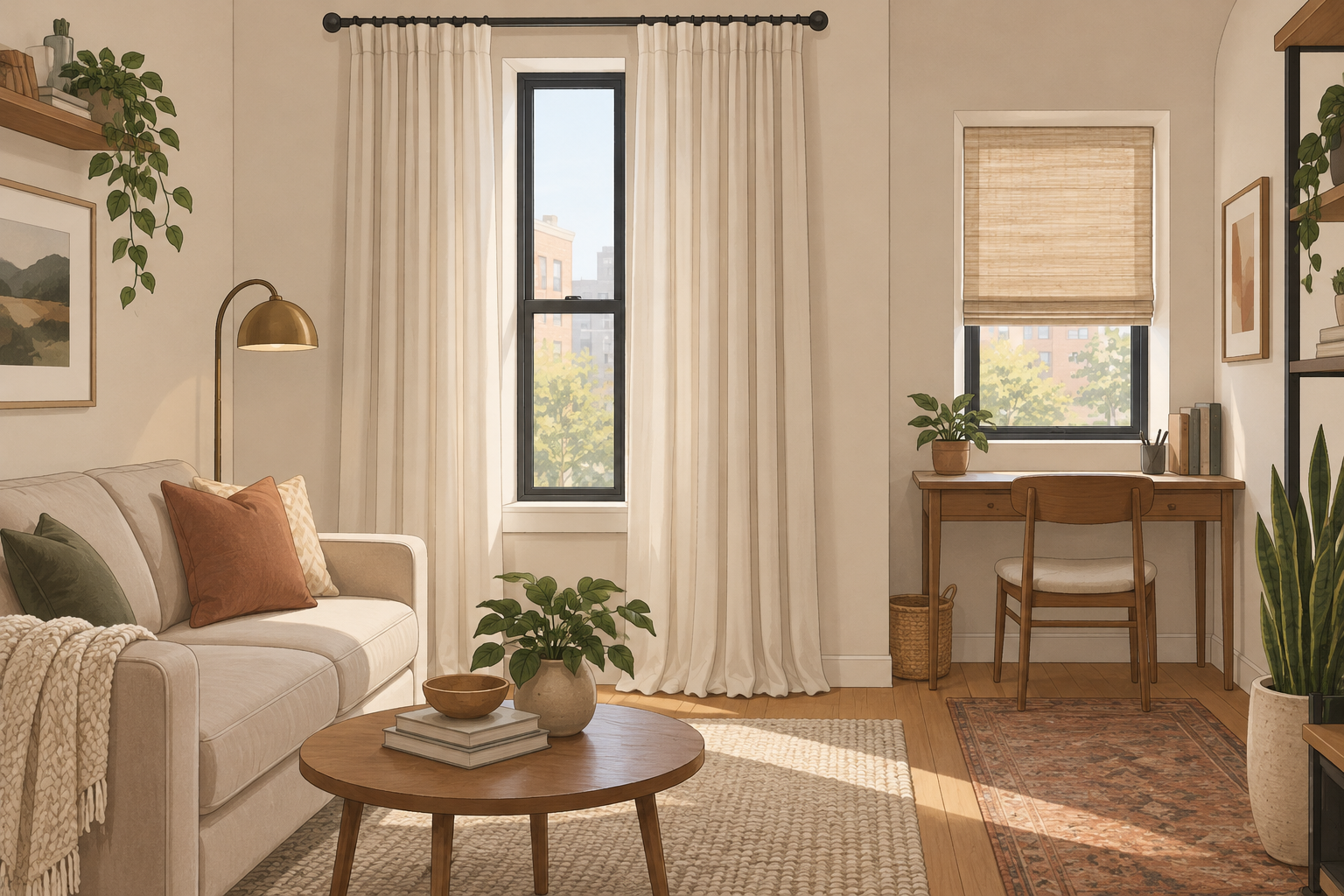
Editorial illustration generated with AI; for styling inspiration only.